
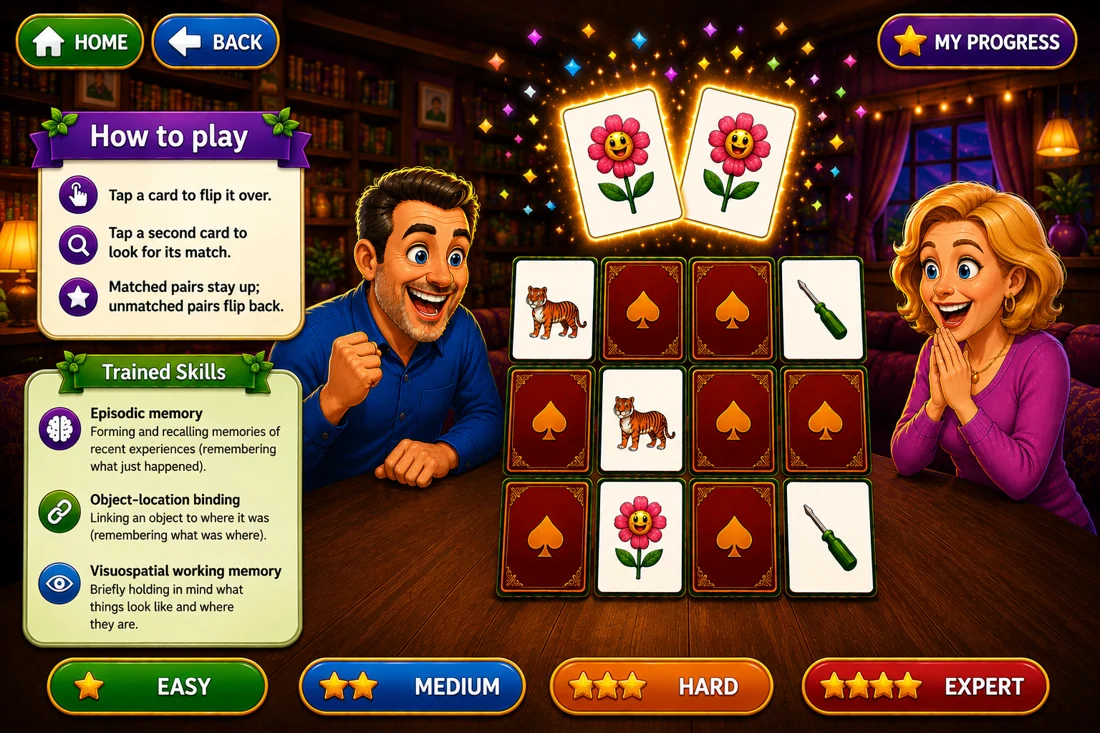
Episodic memory
Memory Match
Associative / object-location memory
A collection of exercises across ten cognitive domains — memory, attention, processing speed, reasoning and more. Every game is modeled on a task type studied in peer-reviewed clinical research, and adapts to keep each session challenging but fair.
We don't invent games and hope they help. We start from the task types researchers use to study memory, attention, and processing speed — and turn each one into an exercise that's calm, clear, and genuinely engaging.
Associative / object-location memory
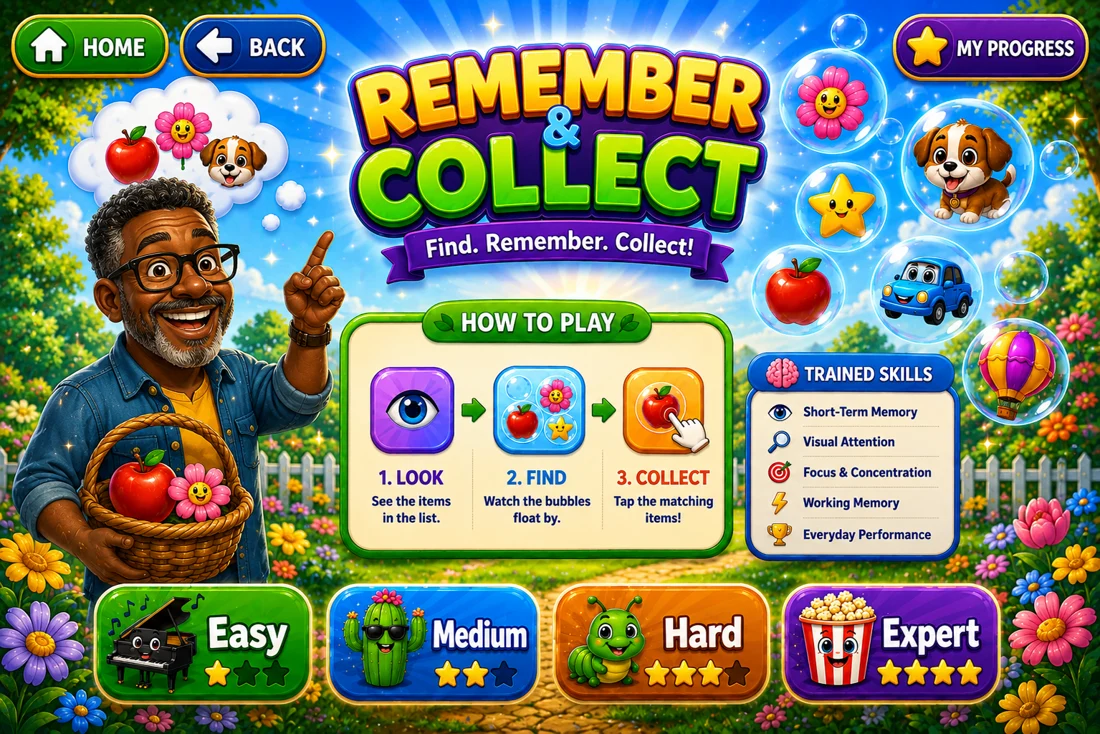
CANTAB DMS/PRM · Mnemonic Similarity Task
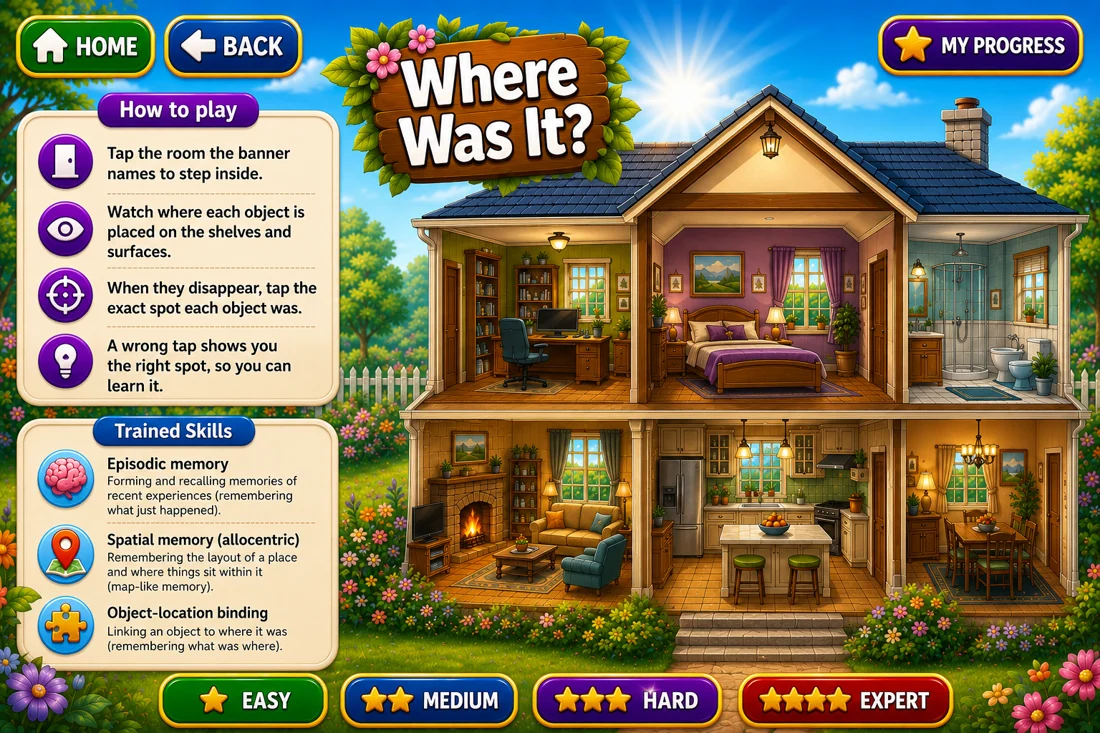
CANTAB Paired Associates Learning
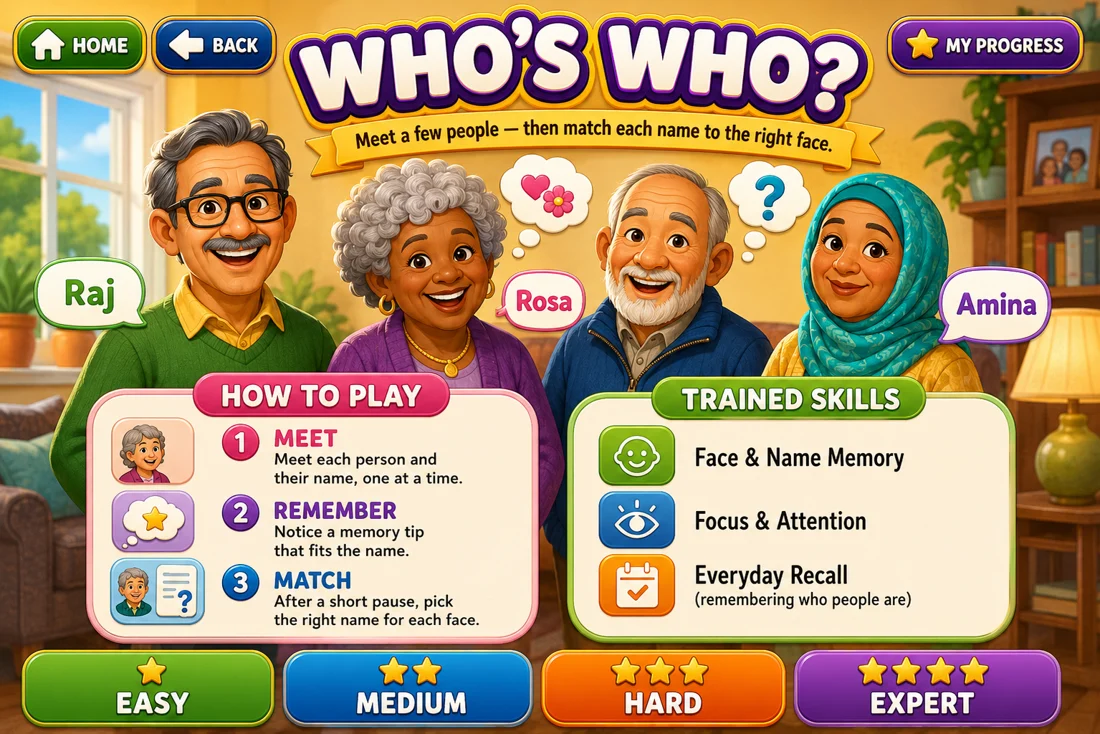
Face-Name Associative Memory (FNAME)
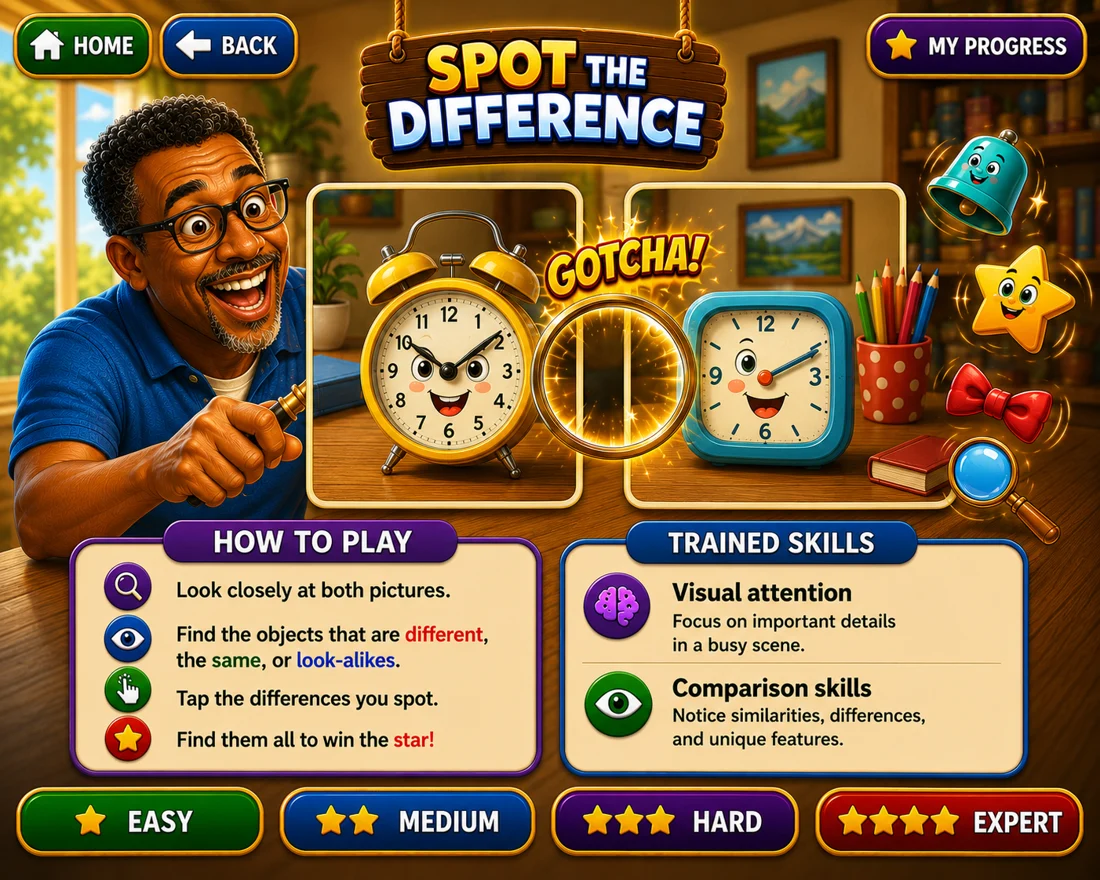
Object Mnemonic Similarity Task
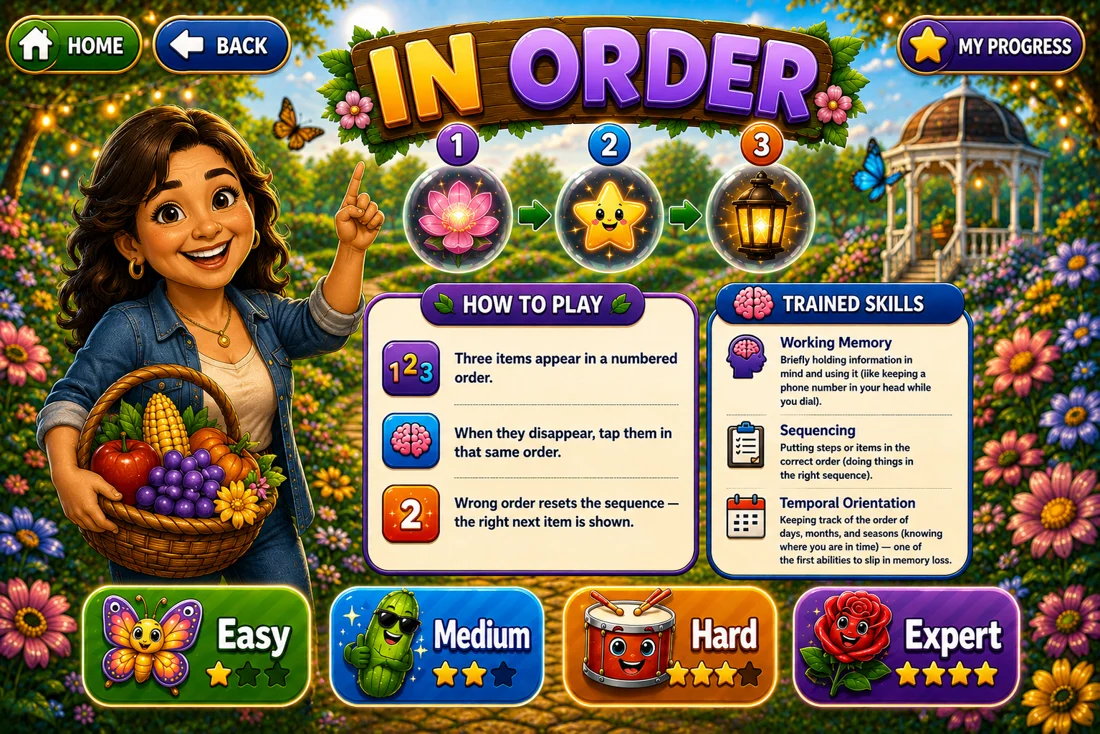
Corsi Block / CANTAB Spatial Span
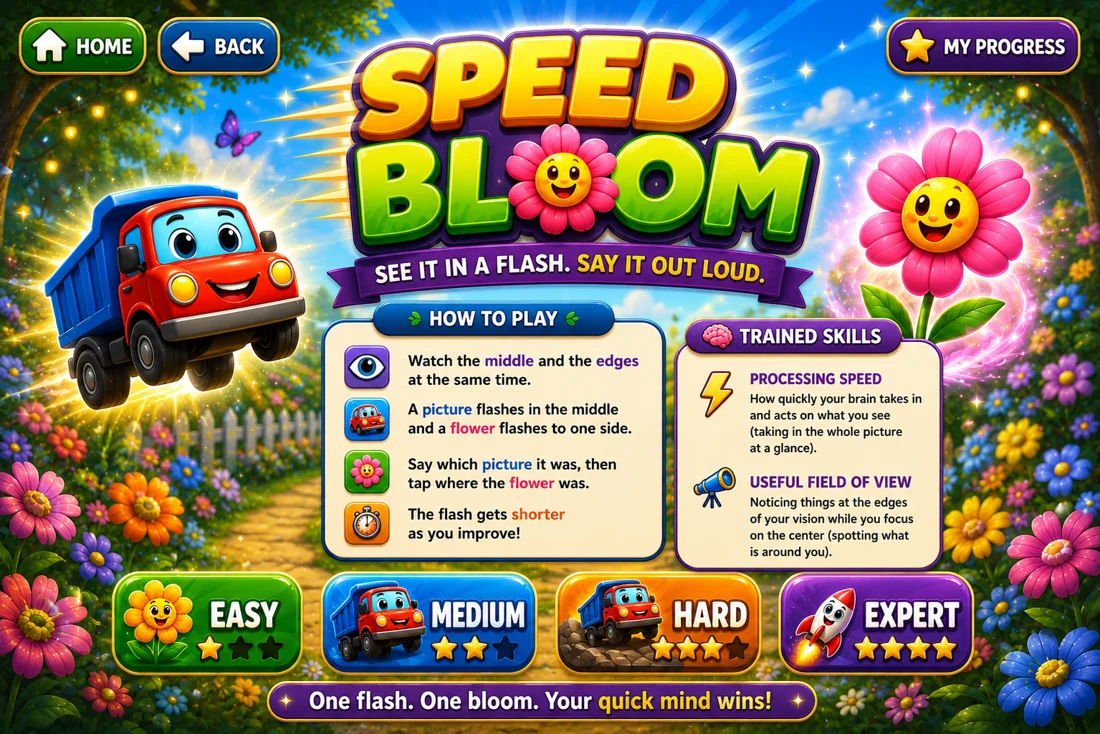
Useful Field of View (ACTIVE-trial task)
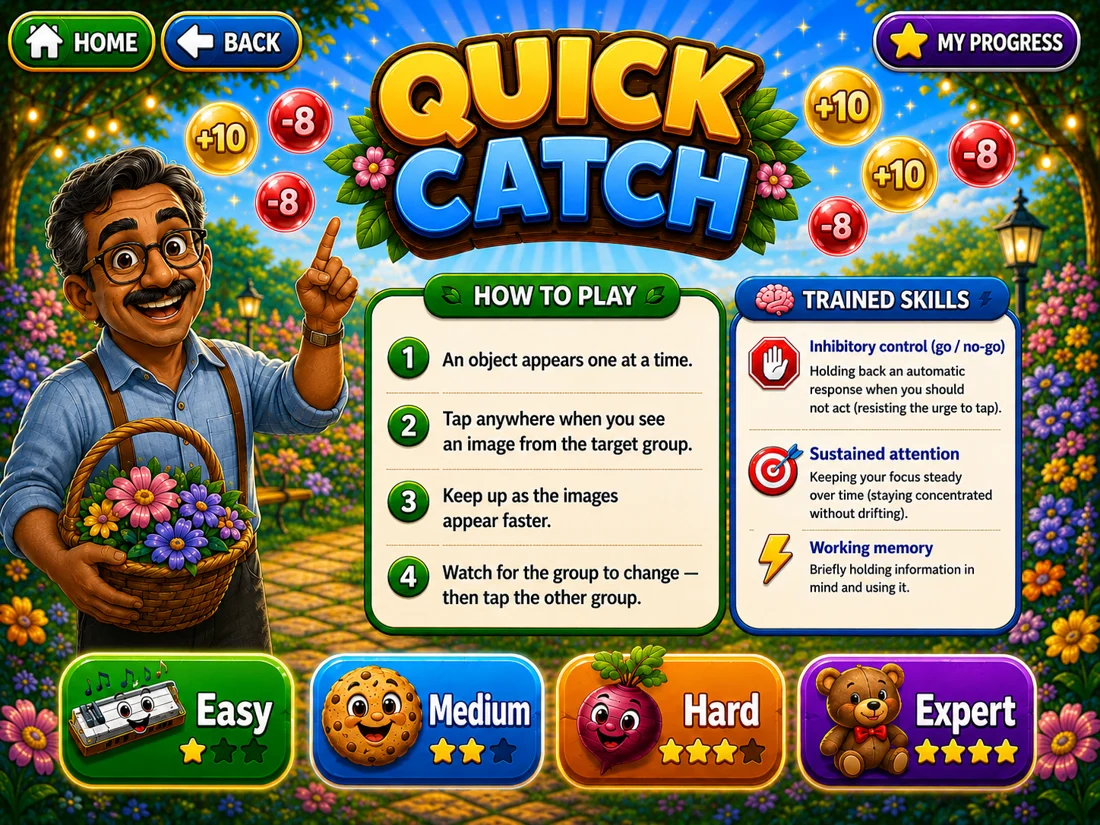
Go / No-Go with rule reversal
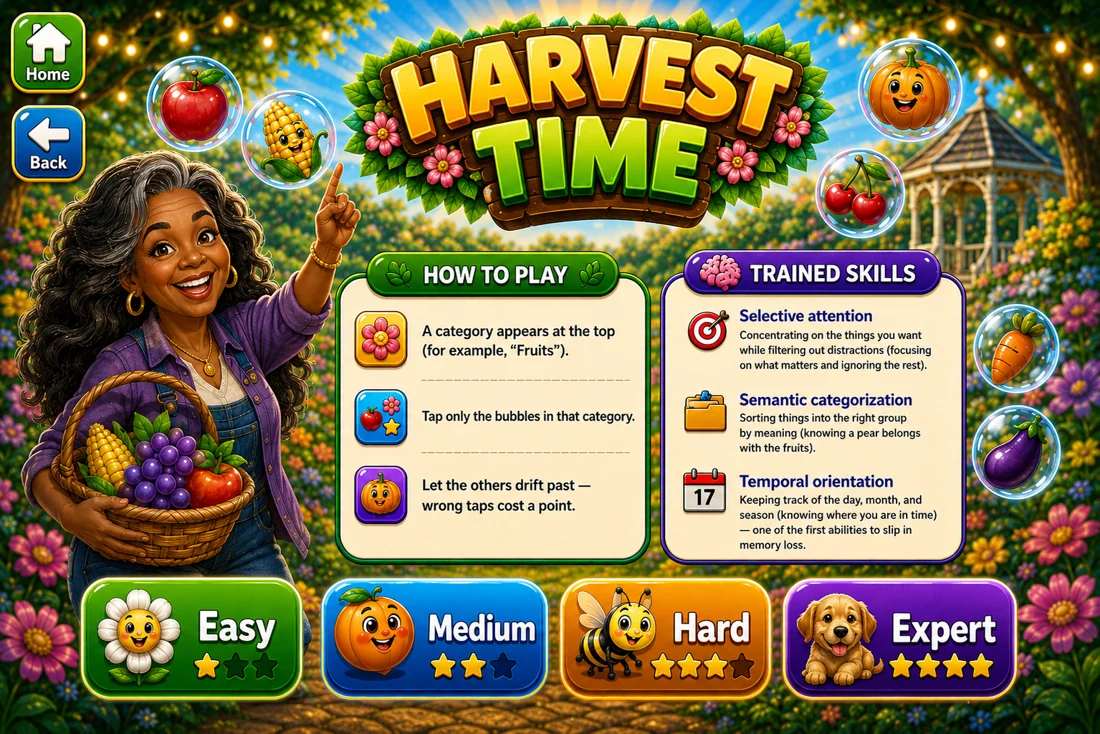
CANTAB Rapid Visual Processing
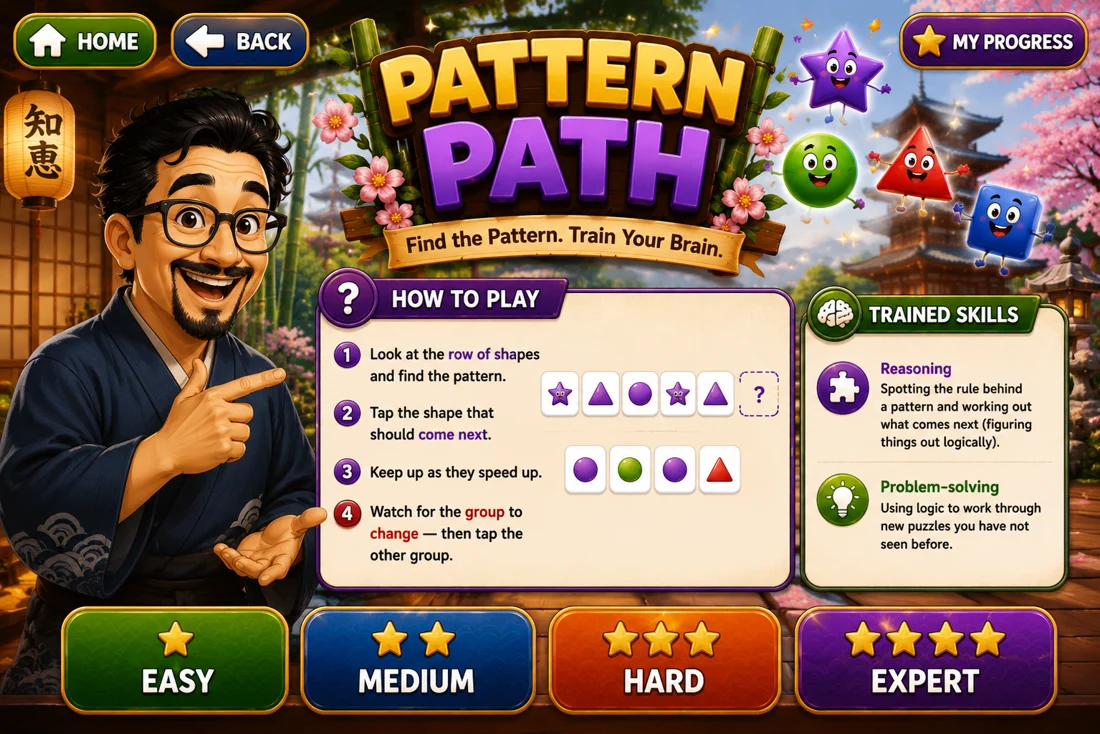
Series completion (ACTIVE reasoning task)

Baddeley grammatical reasoning
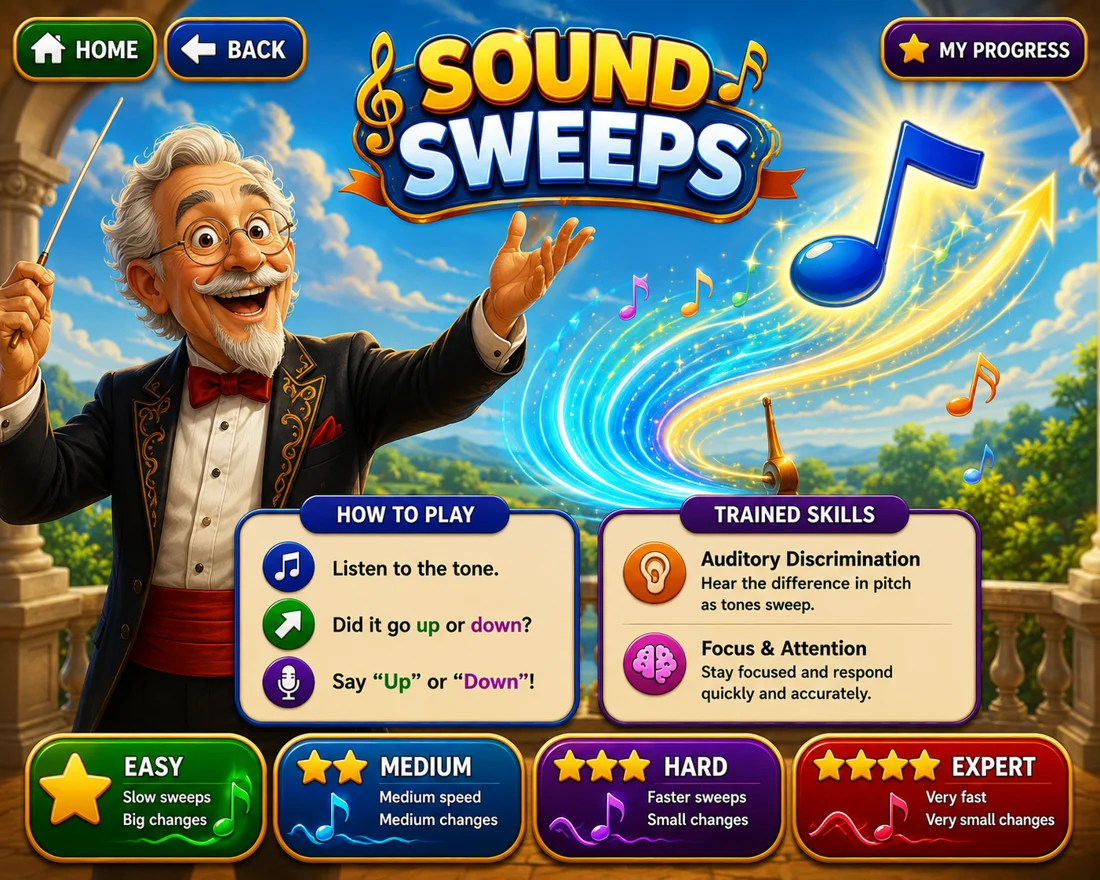
Frequency-sweep discrimination
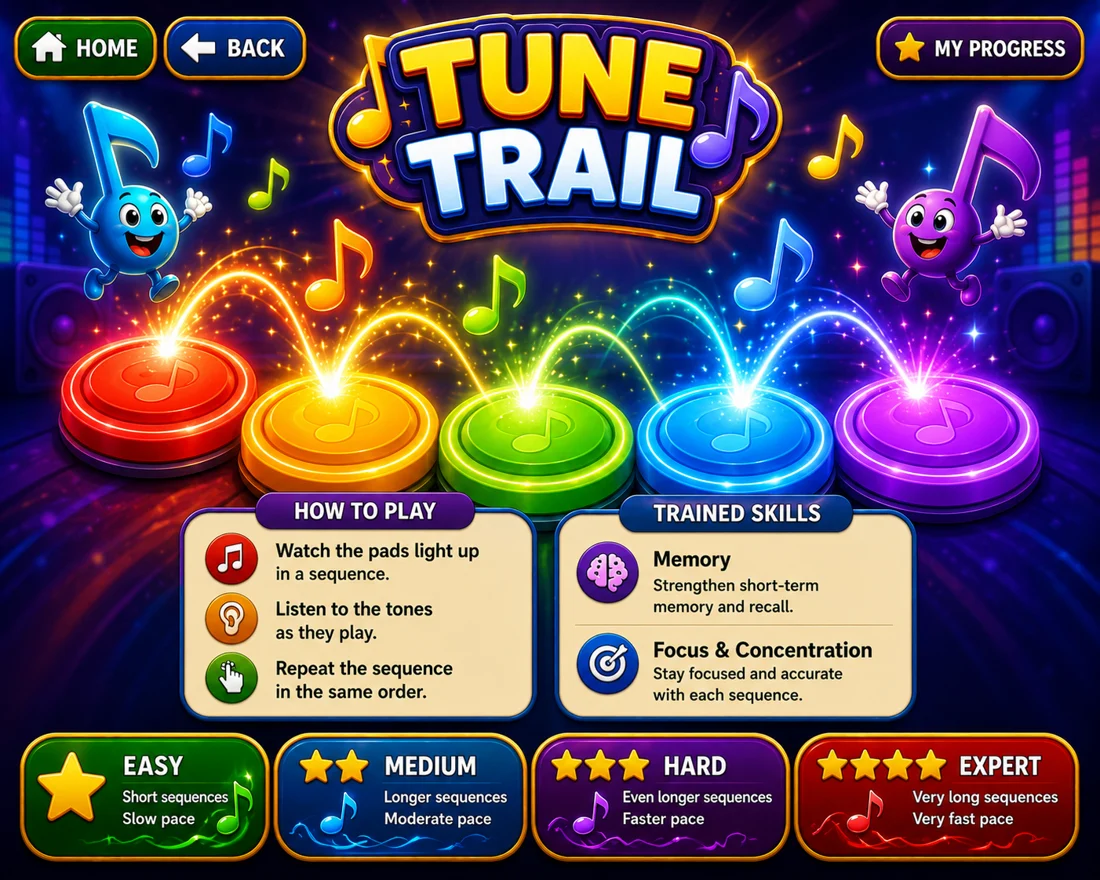
Tonal span
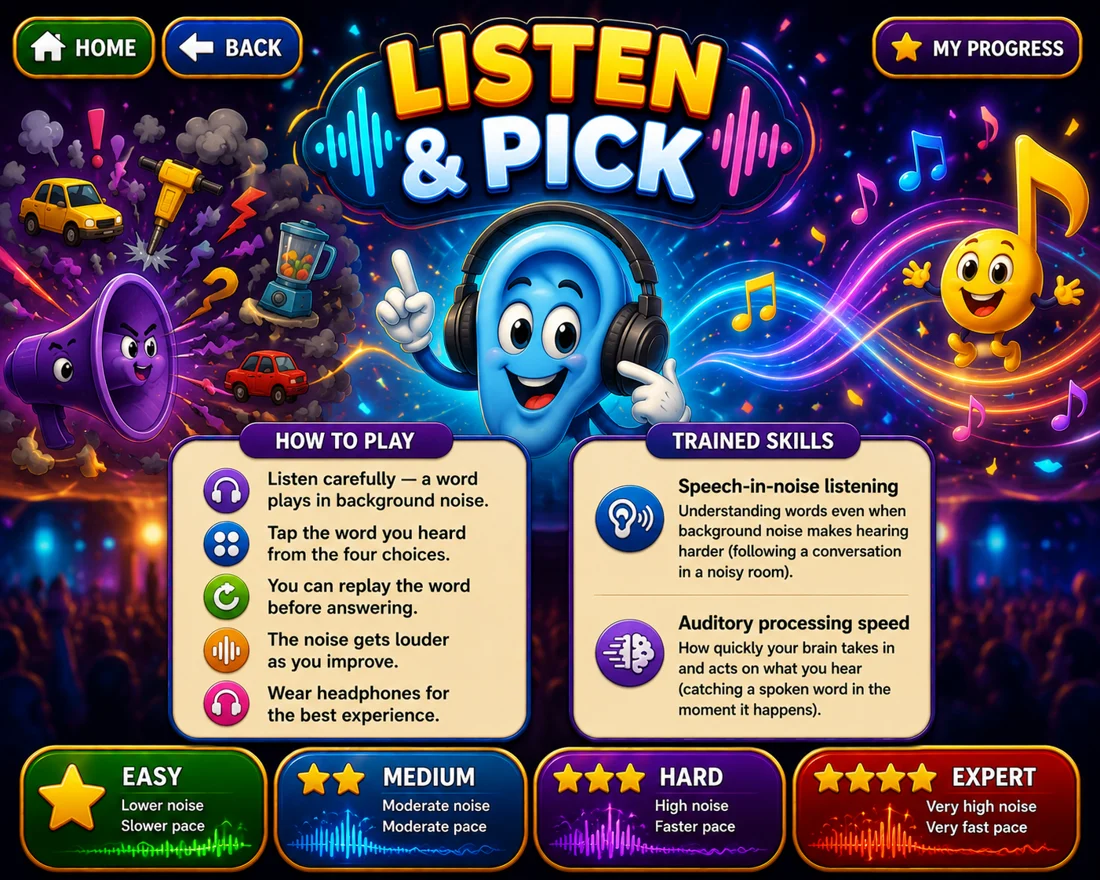
Word-in-noise listening
Each exercise names the paradigm it's built on — the Useful Field of View task used in NIH-funded cognitive-aging research, CANTAB Paired Associates Learning, the Corsi span, the Mnemonic Similarity Task, Face-Name associative memory, and more. Primary-source citations for each are documented in the in-app reference guide.
Mind Sage describes the pedigree of each task, never a promised result for you. It's a wellness product built around published paradigms — it has not itself been tested in a clinical trial, and it does not diagnose, treat, or measure cognition. We think saying so plainly is a feature, not fine print.
A comparison of which validated cognitive paradigms each program covers — not a claim of efficacy or superiority. Numbers show exercises covering each domain.
| Domain or feature | Mind Sage MCI focus | BrainHQ General adult | CogniFit All ages |
|---|---|---|---|
| Who it's built for | |||
| Primary audience Who the exercises are designed and optimized for | MCI / early Alzheimer's (ages 65–80) | Healthy adults (all ages); aging track available | Children, students, adults, older adults |
| Physician-designed Built by a clinician who sees this population | Research neuroscientists | Technology company | |
| Memory — the first domain to decline in Alzheimer's | |||
| Episodic memory exercises Recall of what happened, where objects were, who you met | 6paradigms | 1paradigm | 2paradigms |
| Object-location binding CANTAB Paired Associates Learning — one of the earliest AD biomarkers | Where Was It? | — | — |
| Face-name associative memory FNAME paradigm — one of the most sensitive early AD markers | Face Names | Face-Name Blink | — |
| Hippocampal pattern separation Mnemonic Similarity Task — targets dentate gyrus, declines before symptoms | Spot the Difference Only app | — | — |
| Mnemonic strategy coaching MEMO+ paradigm — effect size 0.95 in published MCI trial | Built into Memory Match Only app | — | — |
| Spaced retrieval training Expanding-interval recall — effective even in mild–moderate AD | Embedded in sessions Only app | — | — |
| Other cognitive domains affected in MCI | |||
| Processing speed UFOV / ACTIVE-trial paradigm — 29% dementia risk reduction at 10 years | Speed Bloom (UFOV) | Core strength (ACTIVE trial data) | Multiple games |
| Attention & inhibitory control Go / no-go, sustained and divided attention | 5exercises | 3exercises | 4+exercises |
| Working memory Spatial span — Corsi Block / CANTAB SSP | In Order | Covered | Covered |
| Executive & inductive reasoning Series completion — ACTIVE trial reasoning arm paradigm | Pattern Path (ACTIVE) | Covered | PartialLimited to planning tasks |
| Language & word-finding Confrontation naming & verbal fluency — affected in early AD | 2exercises | — | PartialVocabulary / synonyms; not naming |
| Designed for this population | |||
| Accessible UX for adults 65–80 Large touch targets, calm pacing, no flashing, no fail states | Purpose-built | PartialDated UI; not mobile-first | PartialDesigned for all ages |
| Private & on-device Activity stays on your device; no cognitive data in the cloud | On-device | Cloud account | Cloud account |
| Care partner view A family member can see activity and consistency (not cognitive scores) | Available | — | — |
| FINGER-aligned lifestyle framing Ties cognitive training to diet, exercise, sleep, and social connection | Built in | — | — |
| Scientific grounding — honest | |||
| Paradigm-level peer-reviewed citations Each exercise names its source paradigm and primary references | All 14 exercises documented | Documented | Documented |
| Product-specific clinical trial A trial testing this app's own outcomes in MCI or older adults | PlannedIRB pilot in progress | ACTIVE trial (NIH-funded, n=2,802) | PartialSmall trials; not MCI-focused |
An adaptive-difficulty engine tunes each exercise trial-by-trial to your personal limit — challenging but fair, never a dead end. Every wrong answer shows the correct one.
Large touch targets, readable type, no flashing, and no fail states. Designed with older adults in mind, including those with mild cognitive concerns.
Your activity stays on your device. Mind Sage is part of a brain-healthy routine — alongside diet, exercise, sleep, and social connection.
Mind Sage is built around a daily habit. Alongside the games you get gentle ways to stay engaged, keep on track, and bring the people who care about you along.
A calm garden view of your activity — the days you played, your current streak, your personal bests, and how your routine grows over the months. It reflects your engagement and consistency, never a cognitive score.
Answer a few questions about your goals and Mind Sage builds a personalized routine — steering you toward the exercises with the most room to grow, and refreshing as your habit develops.
One tap turns your activity into a simple summary you can send to your physician — which exercises you've been doing and how consistent you've been. An engagement snapshot to support your visit, never a diagnosis or a cognitive score.
A calm, readable account screen lets you manage your subscription and preferences whenever you like. Your activity stays private and on your device.
No credit card required
Give a family member their own private view of a loved one's activity — which days they played and how their streak is going — so you can cheer them on and help them keep the habit. It shows engagement and consistency, never cognitive scores.
Launch it right in your browser — no download, no credit card.
Mind Sage is a wellness product, not a medical device. It does not diagnose, treat, cure, or prevent any disease, and it does not measure, assess, or score cognitive function. Its exercises are based on task types studied in published research; Mind Sage itself has not been tested in a clinical trial. It is not a substitute for care from your physician.